Nike Elevated Product Details
Scaled Elevated Product Details — a component suite that improves product education on PDPs — to 238+ products across 5 sports categories, driving a +3-7 point lift to Add to Cart and +1-2 point lift to Conversion on Nike.com and App.
Role
Team
Commerce
Timeline
Skills
Research, Design
Elevated Product Details
Nike's PDPs have relied on branded, long-form copy and images to communicate product details. This structure left a gap in product understanding, consumers weren't getting the depth of information needed to make a purchasing decision. Elevated Product Details (EPD) is a suite of 9 components originally designed to unlock product education for Running Footwear, placed directly below the fold at key decision-making moments on Nike PDPs. These components guide consumers through high-level overviews to granular design and technical details, offering a comprehensive product story that better supports purchasing decisions. My work focused on the next challenge: could this component suite hold up across fundamentally different sport contexts, audiences, and content needs?
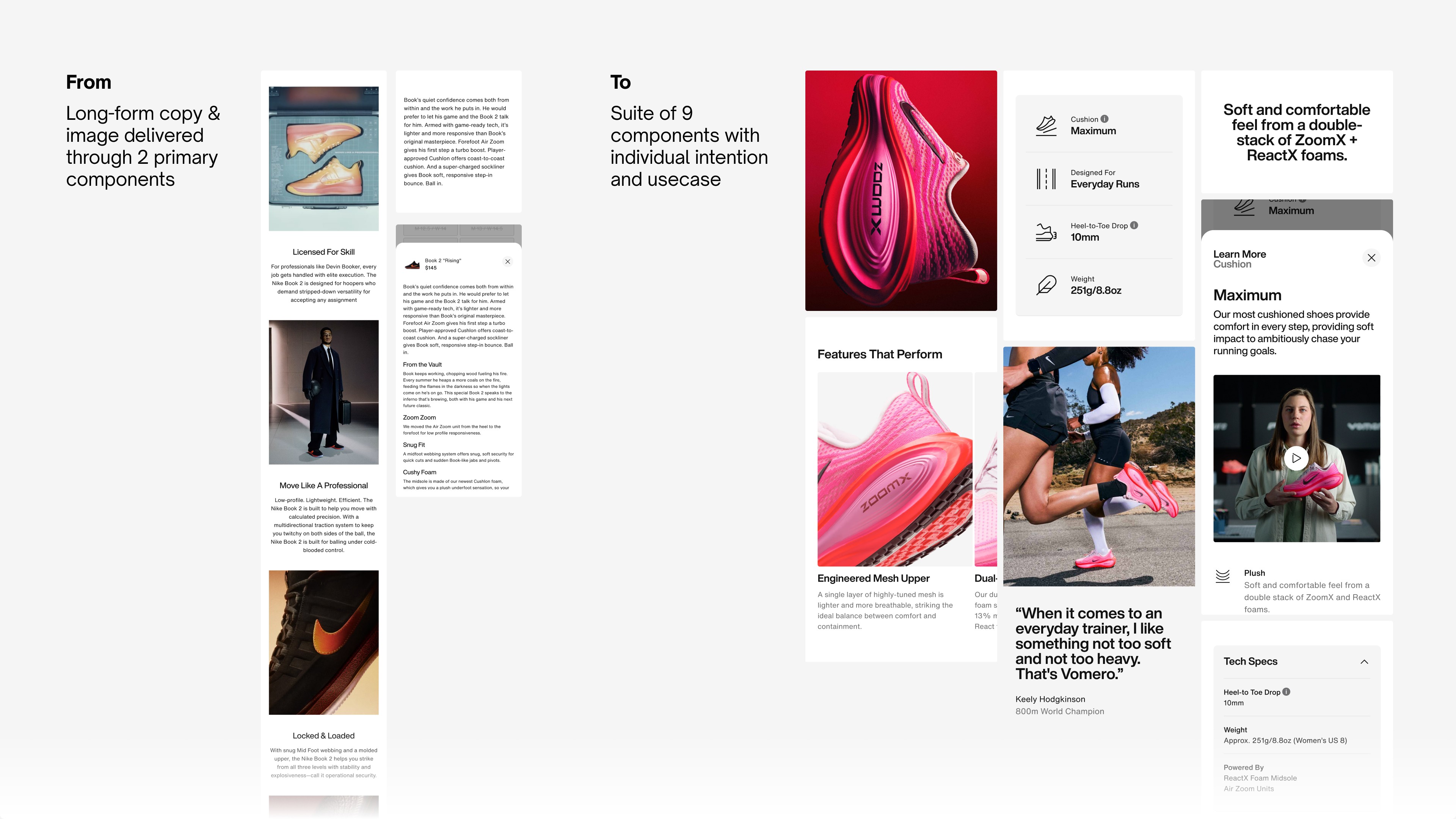
Scaling Process
I owned the end-to-end research and design process to scale out to 5 sports and product categories; Football Footwear, All Conditions Gear, Mind Game, Jerseys and Basketball Footwear. This included designing the research methodology, building and iterating on prototypes for each category, moderating consumer sessions, synthesizing findings into actionable recommendations, and translating those insights into content and design direction for each component. I partnered closely with Marketing, Brand, and Copy teams to ensure research findings and recommendations directly shaped the final experience.
Consumer Research
To validate EPD's components and content across new sport contexts, I ran a qualitative study for each of the 5 categories — 10–12 1:1 sessions per sport, 60–75 minutes each, totaling 78 consumers. Participants explored a prototype for a PDP of a product for that sport, and provided feedback on copy, images, and benefit language, generating findings and direct recommendations for each of the 9 components.
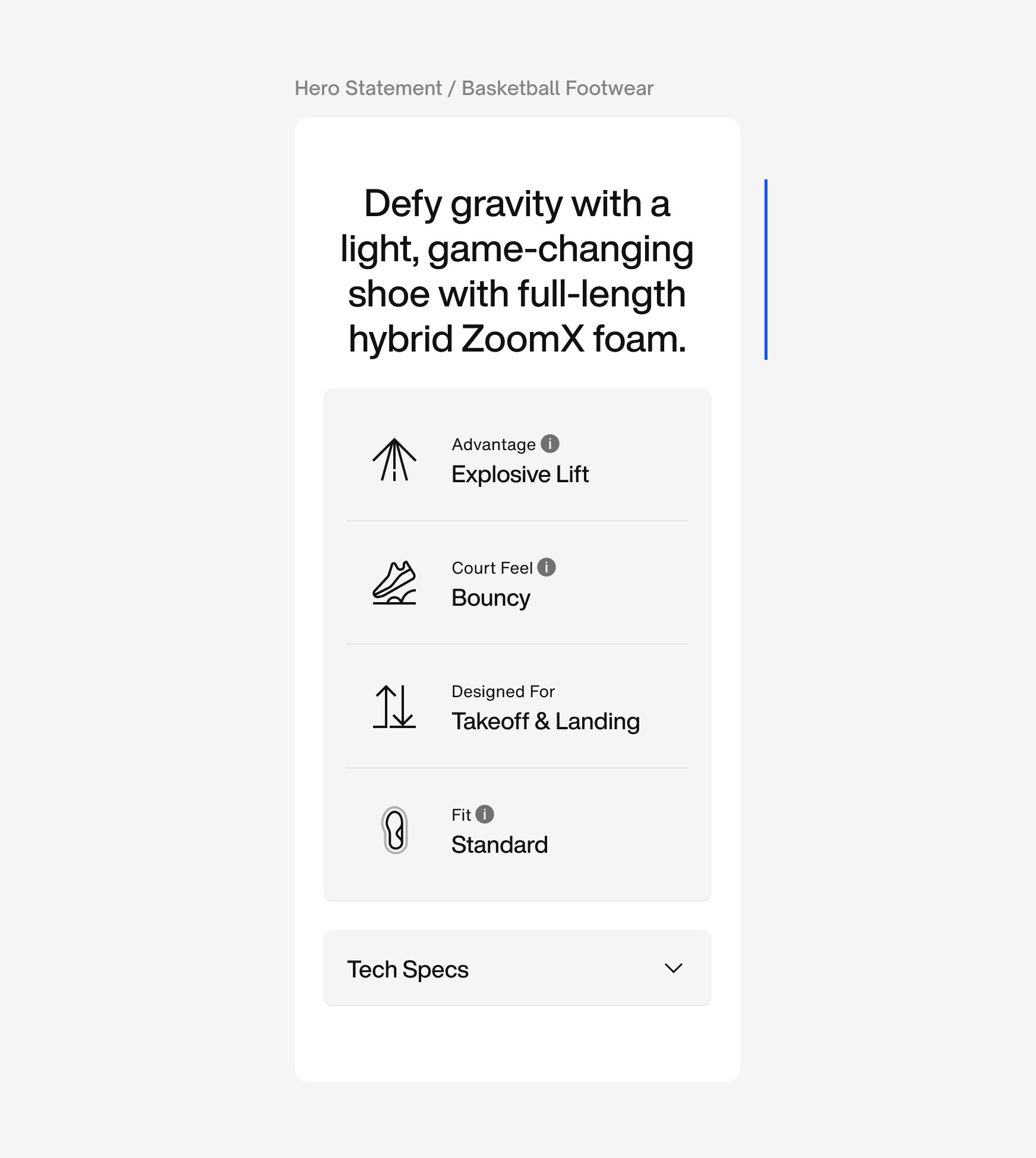
Hero Statement
The Hero Statement leads EPD with a single, bold product claim — pairing the primary consumer benefit with how Nike delivers it.
Research Findings & Recommendations
▪ Language should be simple and direct. Consumers consistently deprioritized dense or jargon-heavy descriptions, treating them as marketing noise rather than useful product information.
▪ End-use context is a universal signal — consumers across all experience levels used it to quickly assess product fit. Where possible, it should be present or alluded to within the Hero Statement.
Benefits & Tech Specs
Highlights the most important product attributes and benefits to support consumer decision-making, designed to be understood by athletes of all experience levels.
Research Findings & Recommendations
▪ End-use information (e.g. Designed For, Best For) was the highest-value content across all experience levels, enabling consumers to quickly match their needs to the product
▪ Experienced athletes actively sought technical specifications — material, weight, technology — and cited them as high-impact to purchase confidence, particularly when nearing a decision.
** Findings were also captured for what specific words should be used for benefit and attribute language for each category, but specific findings cannot be shared due to NDA. Please reach out to learn more. **

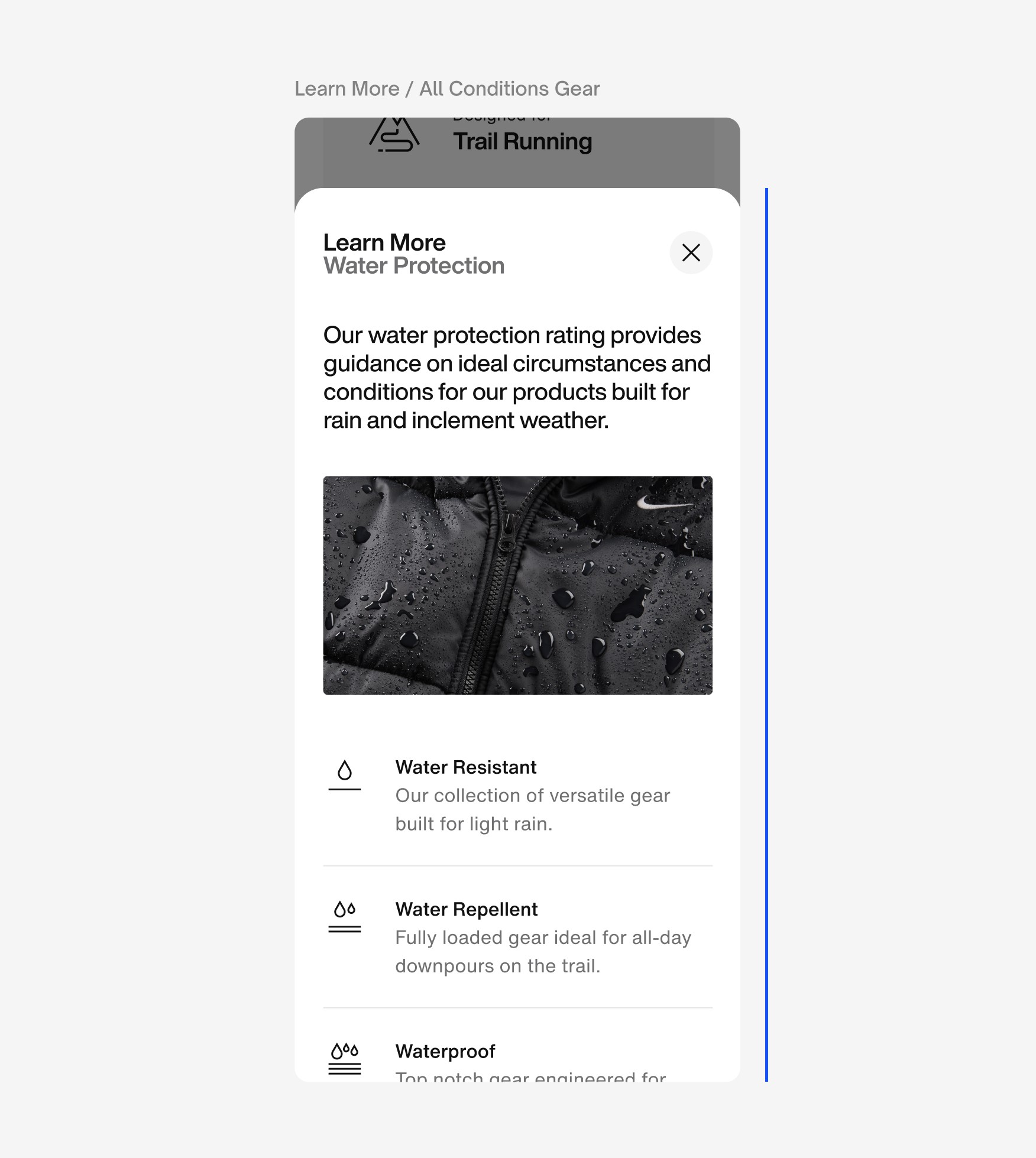
Learn More
An overlay providing a second layer of information — from term definitions to deeper benefit attribute explanations or technology — with language accessible to consumers at all experience levels.
Research Findings & Recommendations
▪ Beginner athletes utilize Learn More to define unfamiliar sports terminology (heel-to-toe drop, firm ground…)
▪ Experienced athletes found Learn More highly impactful to purchase confidence, actively seeking out the additional detail it provides.
What's New
Surfaces the most important updates and differentiators for an upgraded model of a product, providing context for returning consumers and new shoppers alike.
Research Findings & Recommendations
▪ Callouts to updates from previous models were consistently well-received, particularly for products franchises updated frequently/annually (Pegasus, Vomero, Ja, Mercurial). Returning consumers used this section to quickly reaffirm or update their purchase intent.

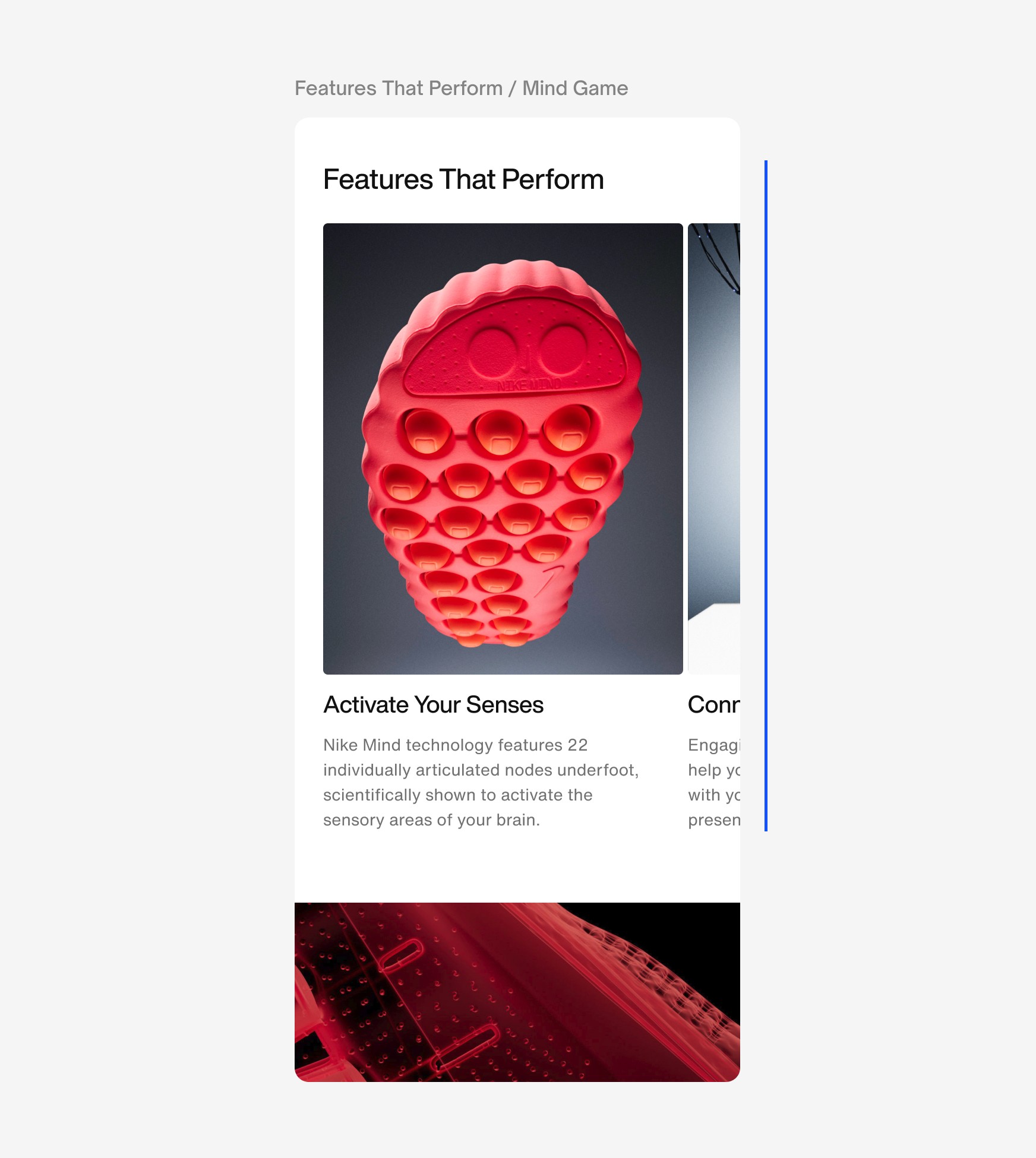
Features That Perform
Pairs product imagery with concise headlines and descriptions providing an opportunity to expand upon ad describe benefits or features of a product.
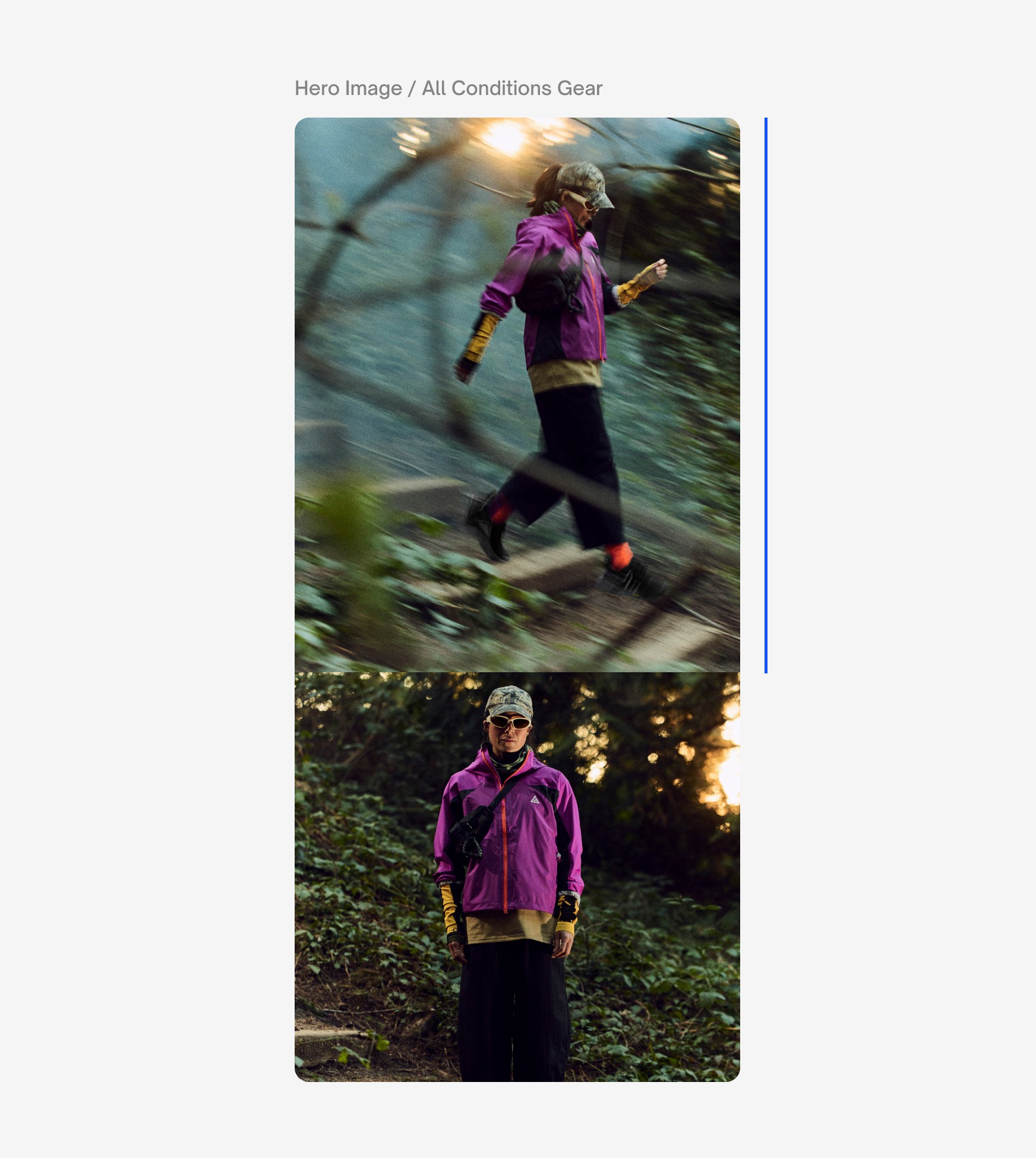
Hero Image
.A full-width image opportunity to reinforce product positioning and primary benefit through intentional, contextual photography.
Athlete Testimonial / Behind the Design
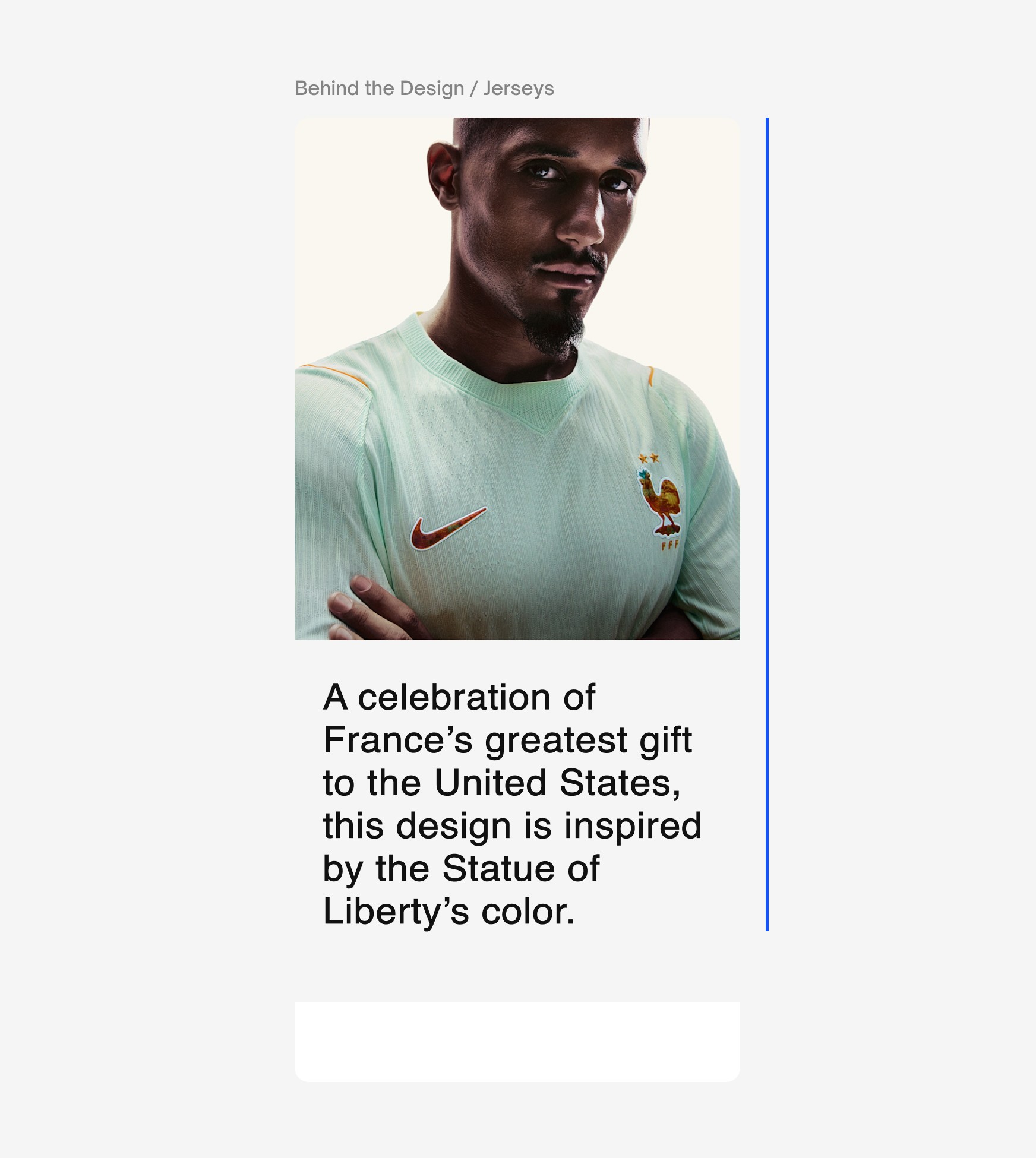
A flexible component serving two distinct purposes depending on the sport. Where athlete partnerships are central to the product story, the Athlete Testimonial surfaces athlete voices to build credibility and confidence. Where design and functionality are the stronger purchase driver, Behind the Design grounds the product in its intended environment or highlights a design detail.
Research Findings & Recommendations
▪ Athlete association helped consumers better understand product intent particularly for Basketball Footwear and Football Footwear — clarifying who the product is made for in terms of playing style, position, or performance level.
Shop More
Extends the browsing experience by surfacing related products that may vary in benefit type, tiering, or design intention — giving consumers a lightweight comparison tool at the point of decision.

Content & Storytelling Deck
A slide deck was created as a playbook to summarize the content needs and purposes of each component, providing guidance on copy and assets. This deck is shared with Marketing & Branding teams at Nike for each sport or product category the component suite is scaled to. View deck below.
Impact
Research findings were presented to Marketing, Brand, and Copy teams at Nike, directly informing content strategy across all 5 sport and product categories and 238+ products to ensure the most consumer-friendly and sport-relevant at launch. Within the first two months, EPD components delivered a +3-7 point lift in Add to Cart and a +1-2 point lift in Conversion on Nike Web and App — validating both the framework and the research-informed content decisions made along the way. See the live experiences for all 5 sports linked below.